


 |
Ipe Lumber Fact Sheet(ipe hardwood, bois ipe,ipe planks,ipe bois) |
Family Name for Ipe Lumber:
Tabebuia of family Bignoniaceae
 Common
Names:
Common
Names:
Ipe wood is known by many names: Ipe Brazil, Amapa, cortex,
Guayacan, Flor Amarillo, Greenheart, Madera negra, Tahuari,
Lapacho negro. It has a number of trade names: Ironwood™,
Pau Lope™ & Brazilian Walnut... these are commercial
names given to Ipe lumber by large Brazilian exporters
Some of these trade names for ipe lumber, include not only Ipe wood, but also a number of other similar species like cumaru (Dipterix odorata) and jarrah (Eucalyptus marginata). "Ipe lumber" can be used in somewhat of a more generic fashion, rather then a singular biological description. Ipe wood is often clustered with other woods that share similar characteristics.
Distribution: Ipe wood (or bois ipe for our french clientele) typically grows in tropical South-central America, in a wide variety of sites, in marshes and riverbanks as well as ridge tops. Ipe trees may grow to 140 feet in height with trunk diameter of up to 6'. It is one of the tallest trees of the amazon region.
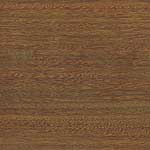
Wood: Ipe Heartwood, is typically reddish brown, sometimes with a greenish tinge, often with lighter or darker striping. It can be covered with a yellow lapachol powder. Much of what I have seen looks similar to a teak wood. Ipe wood comes in good long lengths with limited warp. Sapwood is much lighter white or yellow usually removed at the mill, although small strips along the edge can be present. Ipe hardwood has no distinctive odor or taste.
Ipe wood products contains no added harmful chemicals so it can be used near water without potential contamination, although its dust can cause a number of respiratory and contact dermatitis allergic reactions in humans.
Weight: specific gravity of .85 to .97 .. air dry density 66-75 pcf
Drying: Ipe planks are reported to air dry rapidly, and can show some checking especially with thick timber like 4x4, particularly, if dried quickly in full sun. This can cause warping, especially powerful in large timber like 2x12, that can actually pull fixing screws out of pressure treated stringers... thus recommended to use 2 pieces of 2x6 instead. I have seen recommendations to use anchorseal for sealing ipe end cuts to limit end checking associated with drying.
Working Properties: Ipe lumber can be somewhat difficult to work with, especially with hand tools. Can have quite a blunting effect on cutting edges. Recommended that you use a reduced cutting angle, keep edges sharp, and always predrill for nails or screws. Have numerous extra drill bits handy. Ipe planks do not bend well, but the wood finishes and sands quite smoothly, with no splintering.
Toxicity: Ipe boards can have a fine yellow dust on the surface that may cause dermatitis in some individuals that have skin sensitivities and/or cause allergic reactions in those who breathe it in... so wearing a dust mask is recommended. Ipe hardwood is an amazing wood but no sense in risking your health!
Durability: Heartwood is very resistant to attack by decay fungi and termites, but not resistant to marine borers, it has the durability and strength of teak, for a lot less money.The US Department of Agriculture and Forestry rates Ipé as "Very resistant to attack by decay, fungi and termites."
Fire Rating: a Class A fire rating, the same rating given to concrete & steel.
Preservatives: Ipe wood is very dense, and as such is extremely resistant to preservation treatments. Left to nature the UV sun rays and traditional weathering will change the ipe to a nice consistent light gray. Finishes applied on an annual basis can be used to hold ipe's original colour. If it has been allowed to gray, Ipe can be power washed back to its original appearance.
More Information:
Ipe
Hardwood Flooring
Ipe as a Deck Wood: pros and cons of ipe deck material
US
Forest Products Laboratory: Ipe Wood Fact Sheet
USDA
Forest Products Laboratory-Wood Handbook, 1999Ed
